

Written by Yulia Karmanova, English teacher at EMS Language Centre, PhD in Linguistics, 17 years of teaching experience.
There is no single IELTS band score that every Malaysian university, student visa application or employer requires. Your target depends on the institution, programme and purpose of your application.
Many students start IELTS preparation before answering the most important question: What IELTS score do I actually need?
That is the wrong order.
A student who needs Band 6.0 for a diploma or undergraduate programme and a student who needs Band 7.0 for a specialised degree are working towards very different goals. They may need different preparation timelines, different study strategies and different levels of English improvement.
Before booking an IELTS test or joining a preparation course, first confirm your required overall band and whether you also need minimum scores in Listening, Reading, Writing or Speaking.
The right order is simple:
Know your target → find your current level → identify the gap → build your IELTS study plan.
How IELTS Scoring Works
IELTS measures Listening, Reading, Writing and Speaking separately and then calculates an overall band score on a scale from 0 to 9.
Understanding how IELTS scoring works matters because universities may consider both your overall band and your individual skill scores.
The Four Papers and the Overall Band
Every IELTS candidate receives five scores:
- Listening
- Reading
- Writing
- Speaking
- Overall Band Score
Your overall IELTS band score is the average of your four individual skill scores, rounded to the nearest whole or half band according to IELTS rules.
For example:
| IELTS Skill | Band Score |
|---|---|
| Listening | 6.5 |
| Reading | 6.5 |
| Writing | 5.0 |
| Speaking | 7.0 |
| Average | 6.25 |
| Overall IELTS Band | 6.5 |
An average ending in .25 is rounded up to the next half band, while an average ending in .75 is rounded up to the next whole band.
This distinction between your IELTS overall band vs individual band scores becomes especially important when a university sets minimum scores for each skill.
Why Your Lowest Paper Matters More Than Your Average
A low individual IELTS score can prevent you from meeting a programme requirement even when your overall score is high enough.
Imagine that your university requires:
IELTS 6.5 overall, with no individual component below 6.0.
Your results are:
| IELTS Skill | Your Score | Requirement | Result |
|---|---|---|---|
| Listening | 7.0 | 6.0 | Meets |
| Reading | 7.0 | 6.0 | Meets |
| Writing | 5.5 | 6.0 | Does not meet |
| Speaking | 6.5 | 6.0 | Meets |
| Overall | 6.5 | 6.5 | Meets |
Your overall Band 6.5 is enough, but your Writing score is not.
You would therefore not meet a programme that requires no component below 6.0.
Always check whether your university specifies:
- a minimum overall IELTS band;
- minimum scores for individual papers; or
- both.
Half Bands and How Rounding Works
Half bands such as 5.5, 6.5 and 7.5 are official IELTS scores and can determine whether you meet an admission requirement.
If your programme requires Band 6.5 and you receive Band 6.0, you normally have not met that requirement unless your university offers another approved English pathway.
Half a band may look like a small difference, but for admission it can be decisive.
What Each Band Actually Means
IELTS describes each whole band as a different level of English-language ability. Band 5 is a Modest User, Band 6 a Competent User, Band 7 a Good User, Band 8 a Very Good User and Band 9 an Expert User.
Band 5.0 to 5.5: Modest User
Band 5 represents a modest command of English: you can usually understand the overall meaning in familiar situations, but errors and misunderstandings remain common.
Some foundation, diploma or pathway programmes may accept IELTS scores around this level.
However, Band 5.0 or 5.5 is not a universal minimum IELTS score for studying in Malaysia. The correct requirement depends on the institution and programme.
Band 6.0 to 6.5: Competent User
Band 6 represents a competent command of English, with generally effective communication despite some inaccuracies and misunderstandings.
If you are wondering “Is Band 6 good in IELTS?”, the answer is that Band 6 represents functional English ability and can meet the entry requirement for some programmes.
Band 6.5 is also a common target for international university applicants.
For example, Monash University Malaysia currently lists IELTS Academic 6.5 overall with at least 6.0 in each skill for most undergraduate and postgraduate coursework programmes. Its requirements differ for some specific courses, which demonstrates why students must check their exact programme rather than assuming one IELTS score applies everywhere.
Band 7.0 to 7.5: Good User
Band 7 represents a good operational command of English and the ability to handle complex language and detailed reasoning.
Some specialised or language-intensive university programmes may require Band 7.0 or higher.
At this level, improving your IELTS score often involves more than learning exam techniques. You may need greater accuracy in grammar, more precise vocabulary, stronger academic writing and more consistent speaking performance.
Band 8.0 and Above
Band 8 represents a very good command of English, while Band 9 represents expert proficiency.
These are excellent IELTS scores, but most university applicants do not need Band 8 or 9.
If your programme requires 6.5, your goal should be to meet or confidently exceed that requirement—not spend unnecessary time chasing a score your application does not need.
Malaysian University Requirements
There is no single IELTS score for university in Malaysia. Requirements vary by university, qualification level, programme and, in some cases, individual IELTS component.
One current Malaysian example shows how wide the difference can be:
| Programme Example | IELTS Academic Requirement |
|---|---|
| Monash University Malaysia Diploma of Business | 5.5 overall, no band below 5.0 |
| Most Monash undergraduate and postgraduate coursework programmes | 6.5 overall, minimum 6.0 in each skill |
| Selected Monash programmes with higher English requirements | 6.5 overall with higher component minimums |
| Bachelor of Medical Science and Doctor of Medicine | 7.0 overall, minimum 6.5 in each skill |
These are current examples from one institution, not universal Malaysian university requirements, and published scores can change.
The safest approach is always to confirm the latest English requirement for your exact university and exact programme.
Foundation and Diploma Programmes
Foundation and diploma programmes may sometimes accept a lower IELTS score than direct entry to a bachelor’s degree.
For example, some pathway programmes may accept a student around Band 5.0–5.5, while the degree they eventually progress into requires a higher score.
Before choosing a pathway, check:
- the English requirement to enter the foundation or diploma;
- the English requirement for progression to the final degree; and
- whether minimum individual skill scores apply.
If you are still choosing a university or programme, EMS provides university admission support to help students understand study options and admission requirements.
Undergraduate Degrees
IELTS requirements for undergraduate degrees in Malaysia vary, but many programmes use requirements around Band 6.0–6.5, with some programmes asking for higher scores.
The important point is not the average requirement across Malaysia. It is the requirement published by your chosen university for your chosen course.
A Business degree and a Medicine degree at the same institution may not have the same English standard.
Likewise, one university may accept a score that another university does not.
Before applying, confirm both your overall score requirement and any minimum Listening, Reading, Writing and Speaking scores.
Master’s and Postgraduate
There is no single IELTS requirement for a master’s degree in Malaysia. Postgraduate English requirements vary by university and subject.
If you are researching the IELTS requirement for a master’s degree, check the individual programme page rather than the university’s general admissions page alone.
Some programmes may require around Band 6.0 or 6.5, while more language-intensive or specialised postgraduate programmes can set higher requirements.
Also check whether the university accepts an exemption based on previous English-medium education. Policies vary, so do not assume that completing a bachelor’s degree in English automatically removes the IELTS requirement.
Programmes That Ask for Individual Paper Minimums
Some Malaysian university programmes require both an overall IELTS score and minimum scores in every individual paper.
For example, a requirement may state:
Overall IELTS: 6.5
Listening: minimum 6.0
Reading: minimum 6.0
Writing: minimum 6.0
Speaking: minimum 6.0
In this situation, achieving 7.0 in three papers will not compensate for a Writing score below 6.0.
This is why knowing your weakest IELTS skill matters before you plan your preparation.
Student Visa and Immigration Requirements
There is no single universal “IELTS score for student visa Malaysia” that applies to every international student and every programme.
Your university admission requirement and the English-proficiency documentation required during the Student Pass process need to be considered together.
What EMGS Requires
Education Malaysia Global Services (EMGS) requires applicants for a Visa Approval Letter to demonstrate an acceptable level of English proficiency and upload the relevant certificate as part of the application.
Current EMGS guidance lists IELTS and IELTS Online among the English tests accepted for Student Pass applications, alongside several other recognised tests.
However, this should not be interpreted as one universal IELTS band requirement for every student.
The appropriate English requirement depends on the programme and institution you are applying to.
EMGS also warns that not attaching the required English-language certificate when creating a VAL application can delay processing and may affect eligibility for a Student Pass covering the full duration of the course.
Where the University Requirement and the Visa Requirement Differ
The university decides whether you meet the English entry requirement for your course, while the Student Pass process requires the appropriate English-proficiency documentation where applicable.
Think of these as two connected steps.
First, confirm the IELTS band required for admission to your chosen programme.
Second, make sure the correct English certificate is included with your Student Pass and VAL documents.
Do not begin the visa process based on an IELTS requirement you found for another university or another course.
If you need guidance comparing universities and admission requirements, EMS offers university admission support for international students planning to study in Malaysia.
Employer and Professional Requirements
There is no universal IELTS score for employment. Employers and professional organisations set their own English-language requirements.
Professional Registration Bodies
Some regulated professions require formal evidence of English proficiency.
Depending on the profession and registration body, you may need:
- a specific overall IELTS band;
- minimum scores in each individual skill;
- IELTS Academic instead of General Training; or
- another accepted English-language qualification.
If you are taking IELTS for professional registration, check the regulator’s current requirements before booking your exam.
A score accepted for university admission does not automatically meet a professional requirement.
What Employers Typically Look For
Most employers focus on practical communication ability rather than a specific IELTS band score, although some organisations may request formal proof of English proficiency.
An employer may evaluate your English through:
- interviews;
- emails and written communication;
- meetings;
- presentations;
- customer or client communication; and
- day-to-day teamwork.
If an employer specifically asks for IELTS, confirm the required overall band, individual scores and test type before starting preparation.
Academic or General Training, and Why It Matters
Students applying for university normally need IELTS Academic, while IELTS General Training is more commonly used for workplace, training or migration purposes.
When You Need Academic
IELTS Academic is designed for people applying to higher education and other settings where academic English needs to be demonstrated.
If your goal is to enter a Malaysian university, IELTS Academic will usually be the relevant test.
Before booking, check the precise version your university accepts. Institutions may publish their own rules regarding IELTS Academic, IELTS Online and other test formats.
When General Training Is Enough
IELTS General Training focuses more on English used in everyday, social and workplace situations.
It may be appropriate for certain employment, training or migration purposes.
Do not choose General Training simply because you think it may be easier.
The correct test is the one accepted by the university, employer, immigration authority or professional organisation receiving your score.
How Far Are You From Your Target?
The time and preparation you need depend largely on the gap between the IELTS band you have now and the band you need.
Why You Need a Starting Score Before You Plan
A student currently around Band 6.0 who needs 6.5 has a very different preparation challenge from a student around Band 5.0 who needs 7.0.
Before deciding how long to study, find your current level.
Your starting assessment can help identify whether your main problem is:
- IELTS test technique;
- Writing;
- Speaking;
- vocabulary;
- grammar and accuracy;
- Reading or Listening performance; or
- your general English level.
Once you know your starting point, you can create a preparation plan around the actual gap rather than guessing.
Roughly What Each Band of Improvement Takes
There is no fixed number of weeks required to improve by half a band or one full IELTS band.
The preparation time you need depends on your starting level, target score, study intensity, exposure to English, learning strategy and weakest skills.
A useful planning framework is:
| Current Gap | What Your Preparation May Need |
|---|---|
| Around 0.5 band below target | Focused IELTS practice and work on weak areas |
| Around 1 band below target | Structured preparation, regular practice and detailed feedback |
| More than 1 band below target | Broader English development plus IELTS-specific preparation |
| Already at a high band and aiming higher | Greater accuracy, advanced language control and targeted feedback |
These are planning guidelines, not guaranteed timelines.
The bigger the gap, the more important it is to understand your starting level before setting a test date.
For a detailed study plan by target score, read how long preparation takes.
What to Do Once You Know Your Target
Once you know your target band, build your preparation backwards from the requirement.
Ask four questions:
- What overall IELTS score do I need?
- Does my programme require minimum scores in individual papers?
- What is my current IELTS or English level?
- Which skill is furthest from my required score?
Your goal should be specific.
Instead of saying:
“I want a good IELTS score,”
set a target such as:
“I need Band 6.5 overall with no individual component below 6.0 for my chosen university programme.”
That target immediately tells you what success looks like.
If you are still comparing preparation options, read what to check before booking a course before you make your decision.
Register for EMS IELTS Preparation
If you know your required score but are not sure how to reach it, the IELTS preparation course in Malaysia at EMS Language Centre can help you prepare around your current level and target band.
A structured preparation plan can help you identify weak areas, practise all four IELTS skills and understand where to focus your study time.
If you do not yet know your current level, begin by taking the EMS placement test.
Register for EMS IELTS Preparation
Frequently Asked Questions
What IELTS score do I need for a Malaysian university?
There is no single IELTS score required by every Malaysian university. Requirements vary by university, programme and level of study. Some programmes may accept around Band 5.5–6.0, many use requirements around 6.0–6.5, and specialised courses can require more. Always check your exact programme and individual component requirements.
Is Band 6.5 a good IELTS score?
Yes, Band 6.5 is a strong IELTS score for many academic purposes. It falls between Band 6, which IELTS describes as Competent, and Band 7, described as Good. Many university programmes accept 6.5, although some programmes require a higher overall score or minimum results in Listening, Reading, Writing and Speaking.
What happens if my overall band is fine but one paper is low?
You may still fail to meet your programme’s English requirement. If the university requires Band 6.5 overall with no individual component below 6.0, a Writing score of 5.5 would not qualify even if your overall result were 6.5. Always check individual paper minimums as well as the overall band.
What IELTS score do I need for a student visa in Malaysia?
There is no single IELTS band that applies to every Malaysian Student Pass application. EMGS requires acceptable English-proficiency evidence for relevant VAL applications, while your actual English requirement depends on your programme and institution. Confirm the university’s requirement and the latest EMGS documentation before submitting your Student Pass application.
Do I need Academic or General Training IELTS?
University applicants normally need IELTS Academic. Academic IELTS is designed for higher education, while General Training is more commonly used for workplace, training and migration purposes. The accepted test depends on the organisation receiving your score, so always check your university, employer or professional body’s requirement before booking an IELTS test.
How many times can I retake IELTS?
You can retake IELTS if you have not achieved your required band score. Before booking another test, review your Listening, Reading, Writing and Speaking results to identify the main problem. A targeted study plan is usually more effective than immediately repeating the test without understanding which skill needs improvement.
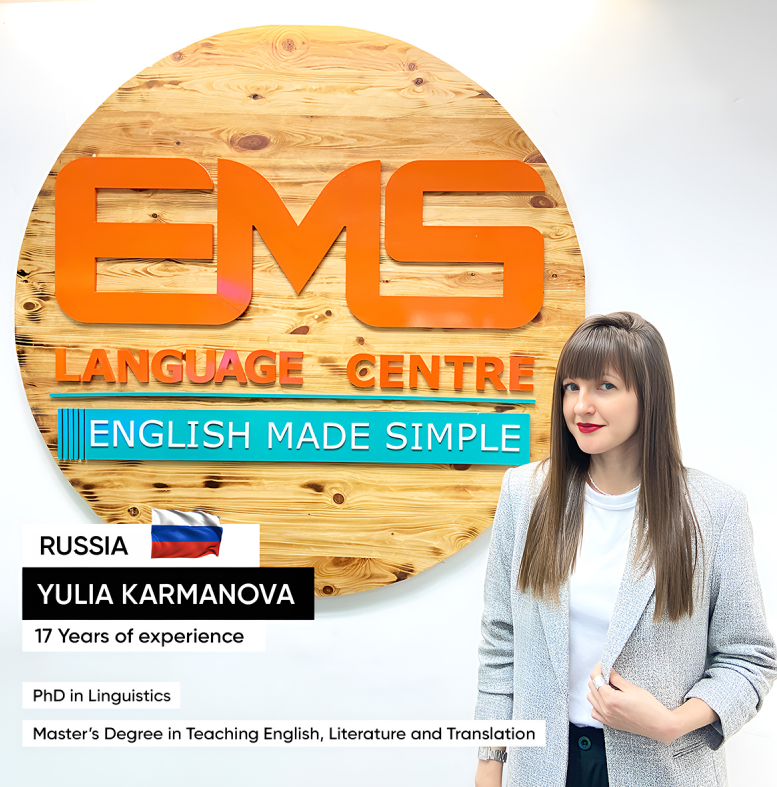 About the author
Yulia Karmanova teaches English at EMS Language Centre in Kuala Lumpur. She holds a PhD in Linguistics and a Master’s Degree in Teaching English, Literature and Translation, with 17 years of teaching experience.